Many of us in the modern Western world come to spirituality through comfort. We are used to choice, convenience, safety, and the freedom to follow what feels pleasant or inspiring. Even retreats and trainings often promise relaxation, beauty, and personal growth without too much disruption, fatigue or personal compromise.
There is nothing wrong with this. It is simply where many of us begin.
Yet the ancient spiritual traditions also speak of something deeper and more transformative: tapasya — conscious effort, sacred austerity — and pilgrimage as a living practice rather than a spiritual holiday. These practices are not about punishment or self-denial for its own sake. They are about creating the inner conditions where real change can occur.
My own path of practicing austerities (of many different types) now officially spans eighteen unbroken years, and pilgrimage has taught me something very simple: it is not meant to be comfortable. It is meant to be honest. In the last nearly 2 decades of nomadism and doing a lot of earth-work all round the world, i can share that there is a difference between impromptu rituals and trips and longer itinerant devotional trips. (And when i reflect on this i would say of the numerous countries i have visited in those years only Mexico, Ireland, Scotland, Israel, Australia, Colombia, Egypt, and now India, were actual pilgrimage trips).
When we remember why we are walking, the sore muscles, tired bodies, simple food, unfamiliar beds, and emotional vulnerability become part of the medicine rather than something to resist. The nervous system leaves its habitual comfort zone, the mind loses some of its usual control, and deeper layers of conditioning begin to surface — not to punish us, but to be met with awareness and compassion.
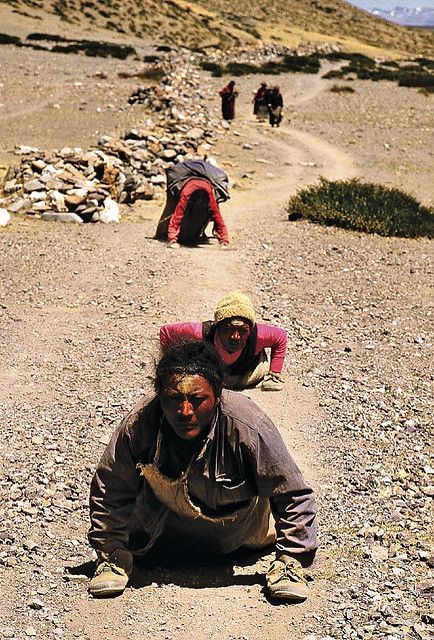
Pilgrimage by full prostration around Mount Kailash. © Galen Rowell/Mountain Light
Image from Why the Dalai Lama Matters, by Robert Thurman
Recently, monks walking barefoot across parts of the United States drew concern from many onlookers. People worried about their discomfort and safety. This response makes sense in a culture that protects comfort and minimizes voluntary hardship. Yet these practitioners were not trying to impress anyone. They were training their minds, bodies, and hearts through deliberate simplicity and effort.
As Sri Anandamayi Ma once explained (paraphrasing), we do not place the burden of an adult upon the shoulders of a child. Those who are weak, elderly, ill, or fragile should only undertake the level of tapasya they can genuinely sustain. True spiritual discipline is never about harming the body or forcing heroic effort. It is about sincerity, steadiness, and intelligent self-responsibility.
In our modern era, pilgrimage can easily become diluted into luxury travel near sacred sites — beautiful hotels, curated experiences, and plenty of photo opportunities. Sometimes people feel disappointed or even offended if the Divine introduces inconvenience, discomfort, or emotional challenge into the journey. Yet traditionally, pilgrimage is precisely meant to reveal what we carry inside: our expectations, attachments, impatience, entitlement, fears, and hidden longings.
Pilgrimage brings up our material shadows. Not because something is wrong with us, but because transformation requires contact with reality.
When approached with devotion, even delays, confusion, interpersonal friction, and bodily fatigue can open us into humility, prayer, gratitude, and surrender. Our spiritual ideas meet our nervous system. Our concepts meet our actual capacity to remain present, kind, and grounded.
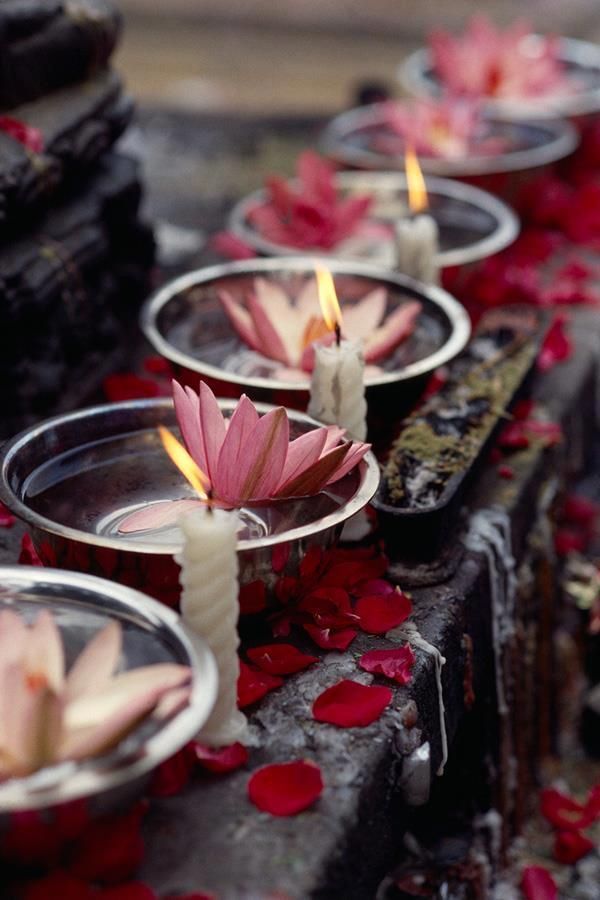
Simple Ways to Walk Pilgrimage Mindfully
If you are newer to this path, pilgrimage does not require extreme austerity. Small, conscious shifts already begin the alchemy:
- Be willing to release special food preferences and familiar comforts when possible.
- Practice generosity and kindness, especially when tired or challenged.
- Create a simple daily rhythm of grounding practice — meditation, mantra, breath, prayer.
- Take time each day to consciously relate to the Divine, however you understand that.
- Practice gratitude, remembering that many pilgrims walk with far fewer resources than we have.
- Contemplate the lives of saints, sages, and devoted practitioners whose perseverance opened genuine realization.
- When emotional material arises, meet it as part of the purification process rather than something to suppress or dramatize.
What Pilgrimage Is Not
Pilgrimage is not:
- A social media performance or selfie tour.
- A way to externalize personal processes for attention or validation.
- A competition to collect sacred sites for status or identity.
- A networking event or romantic adventure.
- A checklist to conquer rather than a relationship to deepen.
When pilgrimage becomes another form of consumption, it loses its sacred function. It may still be enjoyable — but it will rarely bring us closer to truth, humility, or God.
Why We Still Walk
Traditionally, people undertake pilgrimage:
- To soften and burn karmic patterns. This can be extremely beneficial, especially when conducted during particularly astrological windows and transits that may be personal to us.
- To step outside habitual comfort zones, to make compromises and to disrupt clinging behaviours that keep things the same through controlling behaviours.
- To enter a state of healthy instability that reveals deeper dharmic direction.
- To surrender personal control and trust the intelligence of the Divine.
- To honour teachers and lineages that preserved these practices.
- To walk in the footsteps of realized beings and feel the field of their devotion.
- To meet mirrors through travel, relationships, and unpredictability.
- To remember both our self-cherishing tendencies and the tools we have to transform them: practice, prayer, service, and humility.
Even when students are not personally undertaking intense tapasya, learning while a teacher is actively engaged in pilgrimage carries a different quality of transmission. The field is alive, charged, responsive. The teachings arise from lived contact rather than theory. Simply showing up with sincerity becomes part of the practice.
In a culture trained toward comfort, pilgrimage gently teaches us how to trust life again — not as a controlled experience, but as a sacred unfolding. It teaches us how to listen, how to soften, how to endure wisely, and how to recognize grace disguised as inconvenience.
And perhaps most importantly, it reminds us that awakening is not something we consume — it is something we participate in.

 Empowerment to the Golden Age